Okinawa-kenpo is a karate style which has been developed based on ancient Okinawan martial arts called "Ti". Its technique and thought were studied and refined by a Tomari-te master, Shinkichi Kuniyoshi (also known as "BUSHI" Kuniyoshi) and passed down to Grand Master Shigeru Nakamura, the founder of Okinawa-kenpo. Grand Master Nakamura opened his own dojo "Okinawa-kenpo Karate-do Shurenjo" at Onaka, Nago city and taught his art of karate.
Written in Japanese.
Japanese fonts required to view this contents
"Okinawa-kenpo" was founded by Grand Master Shigeru Nakamura in 1960 as an association of diverse dojos based on his belief "there is no Ryuha in Okinawa karate".
Participation to a competition in Kyushu as "The All Japan karate-do Federation, Okinawa District" was how it all started. Nakamura felt how strong Japanese karate organization was at the competition and worried about the future of Okinawa karate.
Then, he appealed to all karate-ka in Okinawa for participating to the movement of "Okinawa-kenpo".
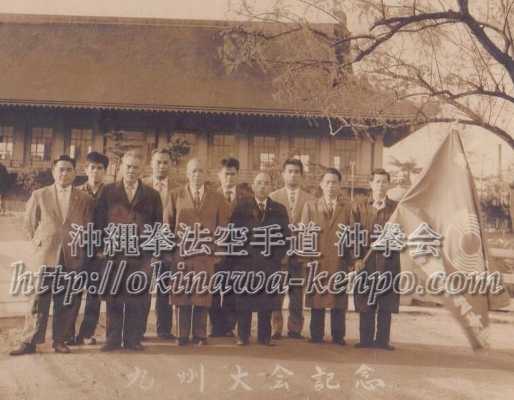
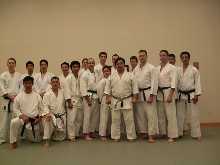
Upper row (left to right): 2nd from left, Komei Tsuha,Hiroshi Miyazato, Toshimitsu Kina
Bottom row (left to right): 2nd from left, Shigeru Nakamura, Shinsuke Kaneshima, Zenryo Shimabukuro
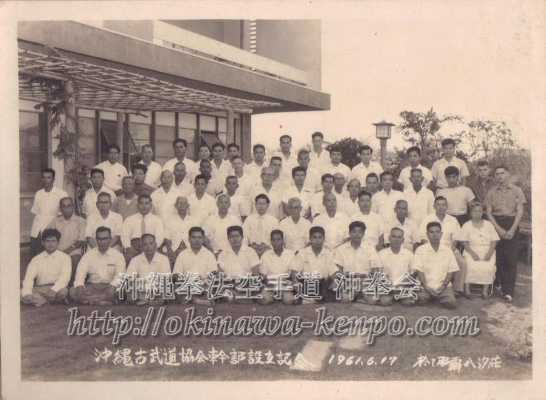
Upper row (left to right): (3rd from left) Kamaichi Nohara, Shinei Kaneshima, Tatsuo Shimabuku, (10th from left) Masami Chinen, Zenryo Shimabukuro
Middle row (left to right): (3rd from left) Shinei Kyan, Shosei Kina, Shinsuke Kaneshima, Seitoku Higa, (8th from left) Seiyu Nakasone, Kenko Nakaima
Bottom row (left to right): Hiroshi Miyazato, Komei Tsuha, (9th from left) Shigeru Nakamura, Joen Nakazato
In June 17, 1961, karate masters from all over Okinawa gathered at Yashio-so, Naha city. At this meeting, they had a discussion about the unification of Okinawa karate and finally came to endorse it (Establishing of Okinawa Kobudo Kyokai).
After Nakamura's passing, the group fell apart. However, Okinawa karate advanced to an era of great development.
Each karate style goes on its own way, and Okinawa-kenpo has become the name of the style which was taught and practiced by the students of Grand Master Nakamura.
Various Ryuha participated in the movement of "Okinawa-kenpo".
Mostly, they were from "The All Japan karate-do Federation, Okinawa District" and "Okinawa Kobudo Kyokai". Exchange of techniques was widely performed among them.
After the death of Nakamura, Okinawa-kenpo was divided into several groups.
Each group inherited Nakamura's will and techniques and developed Okinawa-kenpo in their own way.
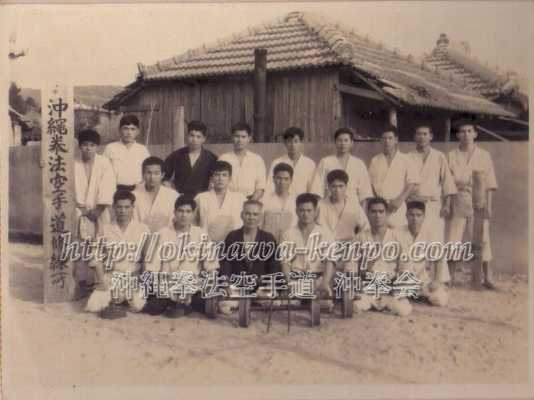
Bottom row, 3rd from left, Grand master Shigeru Nakamura, Shihan-dai Hiroshi Miyazatoo, Toshimitsu Kina
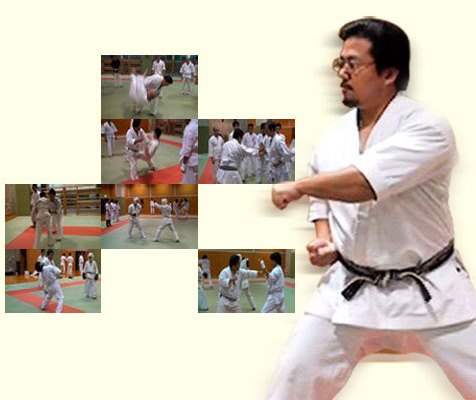
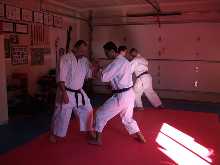
Old style karate techniques and training methods still remain in our system. We train with those methods, which are rarely seen in other Ryuha these days.
Tanren-hou (Training method)
Okinawa-sumo (traditional Okinawan wrestling)
Torite (grabbing)
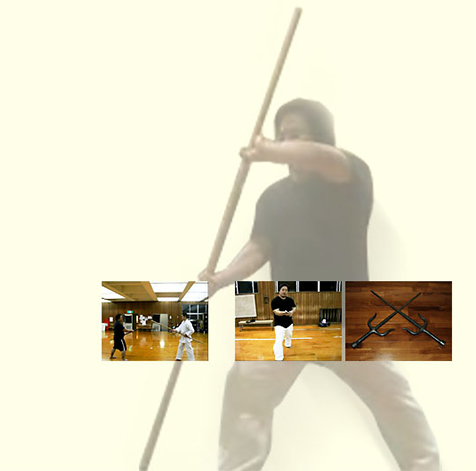
Buki-jutsu (weapons)
Our techniques, from empty hands to weapons,are incorporated in a coherent system and consist of common basic skills.
Historically, Okinawa-kenpo inherited various Kata.
The following is a list of kata which are practiced at Okinawa-kenpo Karate-do, Oki-ken-kai
Karate
Weapons
Ag2CrO4(s)⇌2Ag+(aq)+CrO42−(aq)Ksp=[Ag+]2[CrO42−]Ag sub 2 CrO sub 4 open paren s close paren is in equilibrium with 2 Ag raised to the positive power open paren a q close paren plus CrO sub 4 raised to the 2 minus power open paren a q close paren space cap K sub s p end-sub equals open bracket Ag raised to the positive power close bracket squared open bracket CrO sub 4 raised to the 2 minus power close bracket
) at the lowest concentration of the added reagent precipitates first.
Which salt has the smaller Kₛₚ value?
A typical POGIL activity on this topic will guide you through a series of models and questions. Here are the common questions and their conceptual answers, which you should verify using the specific data and Ksp values in your own POGIL materials. fractional precipitation pogil answer key
Step 2: Determine the Required Cation Concentration for Each Cation
Fractional precipitation is a laboratory technique used to separate ions from a solution by selectively forming solid precipitates one after another. This is achieved by gradually adding a precipitating agent (a common ion) until the solubility product ( Kspcap K sub s p end-sub
Using an answer key as a direct copy source bypasses the critical thinking required to pass chemistry exams. Instead, use your understanding of Kspcap K sub s p end-sub Here are the common questions and their conceptual
Determining the Order of Precipitation: By comparing the calculated concentrations for different ions, students can determine which salt will form first. The salt requiring the lowest concentration of the added reagent precipitates first.
While you might be searching for the "fractional precipitation POGIL answer key," it's crucial to use such answer keys effectively. Since POGIL activities are protected by copyright and often include the answers within the activities themselves, a ready-made answer key is rarely available online. Instead, the materials provide all the data you need. Use this guide to understand the underlying logic, and then work through the questions step by step. Your learning will be much deeper than if you simply copied answers.
Since 8.5 × 10⁻¹⁵ M < 5.0 × 10⁻¹¹ M < 1.8 × 10⁻⁸ M, AgI will precipitate first, followed by AgBr, and finally AgCl. Instead, use your understanding of Kspcap K sub
This concept is a cornerstone of advanced chemistry curriculum. Students frequently encounter it through POGIL (Process Oriented Guided Inquiry Learning) activities, which encourage deep conceptual understanding over simple memorization.
Fractional precipitation is a laboratory technique used to separate two or more ions in a solution by adding a reagent that forms a precipitate with each ion at different concentrations. In chemistry courses, Process Oriented Guided Inquiry Learning (POGIL) activities are frequently used to help students master this concept through self-guided inquiry.
[Ag+]=1.8×10-100.10 M=1.8×10⁻⁹ Mopen bracket Ag raised to the positive power close bracket equals the fraction with numerator 1.8 cross 10 to the negative 10 power and denominator 0.10 M end-fraction equals 1.8 cross 10 to the negative 9 power M As you add Ag+Ag raised to the positive power to the beaker, the concentration climbs. It hits first, causing to form a solid. will not begin to precipitate until the Ag+Ag raised to the positive power concentration reaches Phase 3: Determining Efficiency of the Separation
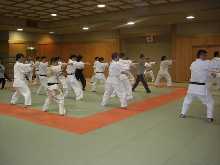
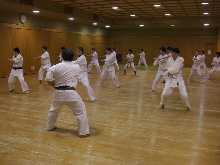
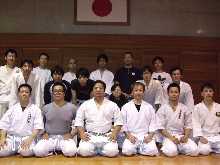
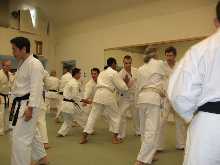
We, Okinawa-kenpo Karate-do Oki-Ken-Kai, work on in a unit called "Keiko-kai".
is a group of like-minded people to practice Okinawa-kenpo any time and anywhere.
Today, there are Keiko-kai in eight region Japan;
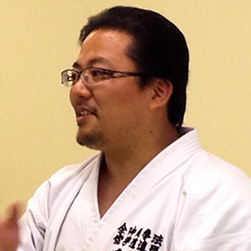
Shihan Yamashiro visits each Keiko-kai regularly, trains them, and conducts open seminars.


Shihan Yamashiro has been invited by masters of other styles, and conducted seminars regularly.


He started practicing karate when he was little with his father, Tatsuo Yamashiro, who inherited "Ti" from Hiroshi Miyazato.
He won 1st place at "All Okinawa Full Contact Fighting with Bogu Gear Tournament" in 1992 and 1993,
Written in Japanese.
Japanese fonts required to view this contents