Getsystemtimepreciseasfiletime Windows 7 Upd Here
- Open Source
- |
- Community-based
- |
- Neutral Platform
9196
Commits
248
Contributors
2561
Forks
4035
Stars
#ifndef SYSTEM_TIME_H #define SYSTEM_TIME_H
: Cygwin 3.5.0 and above no longer support Windows 7, leading to binaries compiled with these toolchains failing on older systems.
Users on Windows 7 often encounter the error message: “The procedure entry point GetSystemTimePreciseAsFileTime could not be located in the dynamic link library KERNEL32.dll” . This happens because:
: Use GetProcAddress to check for the function at runtime rather than linking to it statically.
The error message "The procedure entry point GetSystemTimePreciseAsFileTime could not be located in the dynamic link library KERNEL32.dll" occurs because the function GetSystemTimePreciseAsFileTime
is not natively available in Windows 7. It was introduced in Windows 8 to provide higher precision time stamps ( The Julia Programming Language Root Cause Analysis Version Incompatibility
Recent updates to the intentionally transition the standard C++ runtime and generated binaries to rely on newer Windows APIs. When a developer builds an application using the default settings of a modern compiler, the C runtime library ( ucrtbase.dll ) automatically links to GetSystemTimePreciseAsFileTime to handle basic standard library features like std::chrono or time() .
typedef void (WINAPI *PGETSYSTEMTIMEPRECISEASFILETIME)(LPFILETIME);
As Windows 7 continues to age, the number of applications that require newer APIs will only increase. Microsoft officially ended support for Windows 7 in January 2023, and most major software vendors have followed suit. For developers maintaining Windows 7 compatibility, it's increasingly important to adopt runtime checks and fallback mechanisms rather than expecting a system update to magically add missing functions.
if (pFunc != NULL) // Safe to use else // Use alternative
This article explains what GetSystemTimePreciseAsFileTime is, why it causes issues on Windows 7, and how to resolve it through Windows updates or code workarounds. What is GetSystemTimePreciseAsFileTime?
As hardware performance advanced, developers required sub-microsecond precision for tasks like database serialization, cryptographic handshakes, and high-frequency network protocols. Microsoft introduced GetSystemTimePreciseAsFileTime to address this need. It leverages the CPU's invariant Time Stamp Counter ( RDTSCP ) to deliver a precision of 100 nanoseconds. Because this API interacts directly with deeper architectural layers introduced in the Windows 8 kernel, Microsoft never backported it to Windows 7. 2. The Role of Modern Compilers (The MSVC Factor)


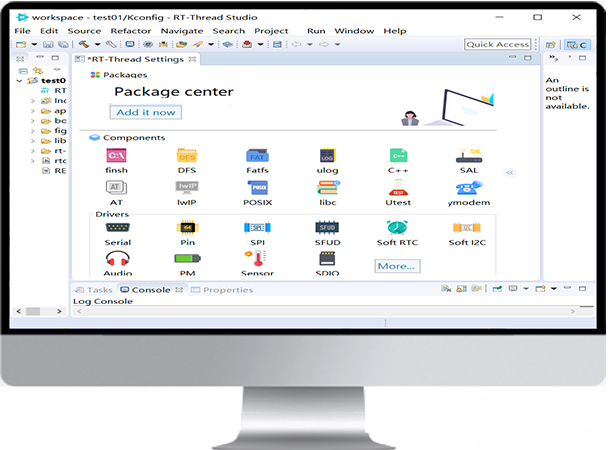
RT-Thread studio is one-stop development tool, it has easy-to-use graphical configuration system and a wealth of software packages and components resources, which makes IoT development simple and efficient.
#ifndef SYSTEM_TIME_H #define SYSTEM_TIME_H
: Cygwin 3.5.0 and above no longer support Windows 7, leading to binaries compiled with these toolchains failing on older systems.
Users on Windows 7 often encounter the error message: “The procedure entry point GetSystemTimePreciseAsFileTime could not be located in the dynamic link library KERNEL32.dll” . This happens because:
: Use GetProcAddress to check for the function at runtime rather than linking to it statically. getsystemtimepreciseasfiletime windows 7 upd
The error message "The procedure entry point GetSystemTimePreciseAsFileTime could not be located in the dynamic link library KERNEL32.dll" occurs because the function GetSystemTimePreciseAsFileTime
is not natively available in Windows 7. It was introduced in Windows 8 to provide higher precision time stamps ( The Julia Programming Language Root Cause Analysis Version Incompatibility
Recent updates to the intentionally transition the standard C++ runtime and generated binaries to rely on newer Windows APIs. When a developer builds an application using the default settings of a modern compiler, the C runtime library ( ucrtbase.dll ) automatically links to GetSystemTimePreciseAsFileTime to handle basic standard library features like std::chrono or time() . #ifndef SYSTEM_TIME_H #define SYSTEM_TIME_H : Cygwin 3
typedef void (WINAPI *PGETSYSTEMTIMEPRECISEASFILETIME)(LPFILETIME);
As Windows 7 continues to age, the number of applications that require newer APIs will only increase. Microsoft officially ended support for Windows 7 in January 2023, and most major software vendors have followed suit. For developers maintaining Windows 7 compatibility, it's increasingly important to adopt runtime checks and fallback mechanisms rather than expecting a system update to magically add missing functions.
if (pFunc != NULL) // Safe to use else // Use alternative and high-frequency network protocols.
This article explains what GetSystemTimePreciseAsFileTime is, why it causes issues on Windows 7, and how to resolve it through Windows updates or code workarounds. What is GetSystemTimePreciseAsFileTime?
As hardware performance advanced, developers required sub-microsecond precision for tasks like database serialization, cryptographic handshakes, and high-frequency network protocols. Microsoft introduced GetSystemTimePreciseAsFileTime to address this need. It leverages the CPU's invariant Time Stamp Counter ( RDTSCP ) to deliver a precision of 100 nanoseconds. Because this API interacts directly with deeper architectural layers introduced in the Windows 8 kernel, Microsoft never backported it to Windows 7. 2. The Role of Modern Compilers (The MSVC Factor)